 Complete Guide
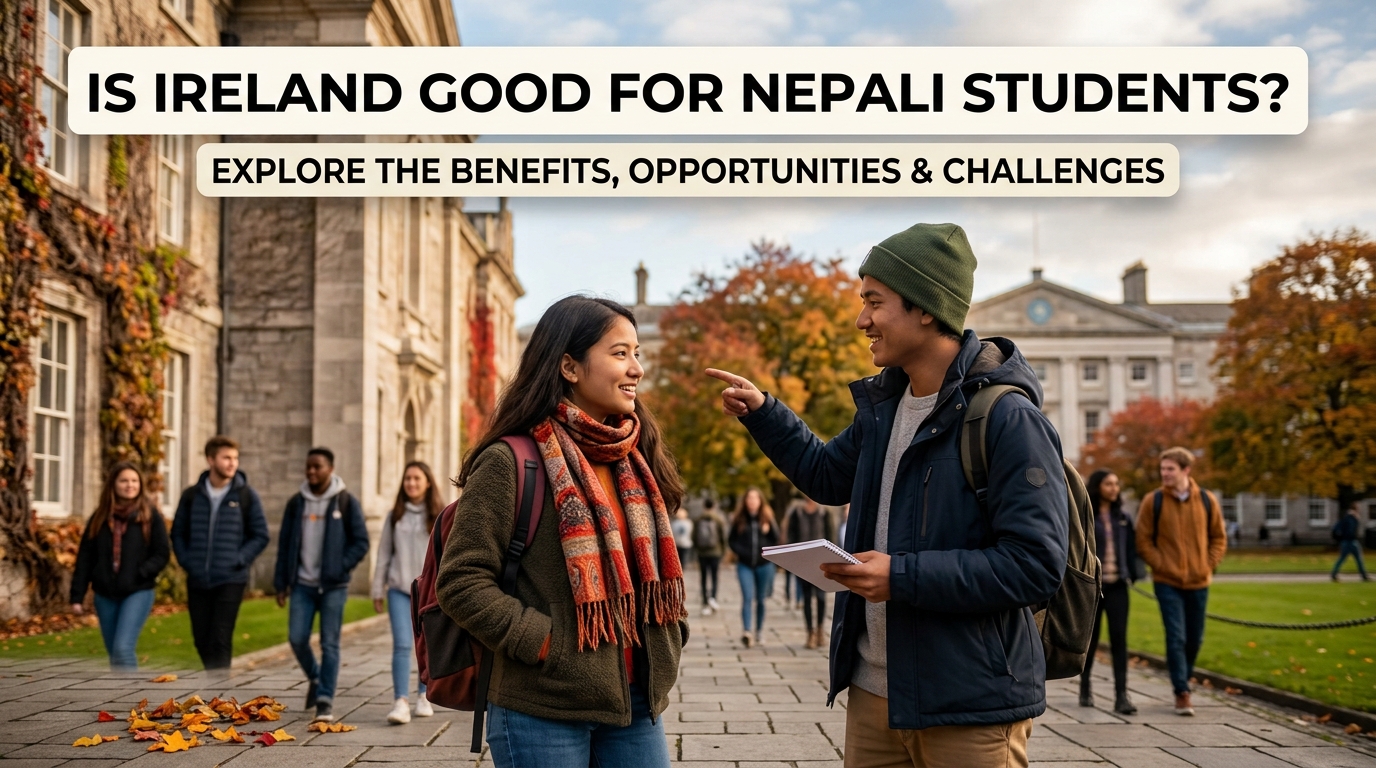
Is Ireland Good for Nepali Students?
Why Nepali Students Choose Ireland
1. English-taught degrees
Ireland offers bachelor’s, master’s and doctoral programs taught in English. This allows Nepali students to study in an English-speaking environment without needing to learn a new language before starting university.
Popular study areas include:
- Computer science and information technology.
- Data science and artificial intelligence.
- Cybersecurity.
- Business analytics.
- Finance and accounting.
- Engineering.
- Pharmaceutical and life sciences.
- Public health.
- Hospitality and tourism.
2. Recognized universities
Ireland has internationally recognized universities and technological universities, including:
- Trinity College Dublin.
- University College Dublin.
- University College Cork.
- University of Galway.
- University of Limerick.
- Dublin City University.
- Maynooth University.
- Technological University Dublin.
- Atlantic Technological University.
- Munster Technological University.
The best university depends on the course, entry requirements, tuition fees, location and career goals—not only on its ranking.
3. Strong technology and business sectors
Ireland is home to a strong technology, pharmaceutical, financial services, and business sector. This makes it attractive for students with qualifications in:
- Software development.
- Data analytics.
- AI and machine Learning.
- Cybersecurity.
- Cloud computing.
- Engineering.
- Finance.
- Business analytics.
- Biotechnology and pharmaceuticals.
Students who build practical skills, complete projects and gain relevant experience may be better positioned for graduate employment.
4. Post-study opportunities
Eligible graduates may qualify for Ireland’s Third Level Graduate Program, known as Stamp 1G. The duration depends on the qualification level and immigration rules.
During this period, graduates can seek suitable employment and later explore employment-permit options. Graduate permission does not guarantee permanent residence or a work permit; graduates must find qualifying employment and meet requirements.
5. Part-time work while studying
Eligible non-EEA students holding the correct immigration permission may generally work:
- Up to 20 hours per week during academic term.
- Up to 40 hours per week during specified holiday periods.
Students must verify the current conditions of their immigration permission. Treat part-time work as supplementary income, not the main plan for tuition or living expenses.
6. Diverse and welcoming environment
Ireland has a multicultural student population and international communities in cities such as Dublin, Cork, Limerick, Galway and Waterford. Nepali students can connect through university societies, cultural groups, community networks and student organizations.
Studying in Ireland also helps students develop:
- English communication skills.
- Independence.
- Professional confidence.
- Cross-cultural experience.
- International networks.
Costs for Nepali Students
Ireland requires a realistic financial plan. Costs vary by course, city, and lifestyle.
Typical annual planning budget
Some programs, especially medicine, health sciences, and specialized postgraduate courses, may cost significantly more. Students should use the official university fee schedule for their selected course.
For immFor immigration, students may need to show immediate access to at least €10,000 for one academic year of living expenses, in addition to tuition evidence.ty differences
- Dublin: More universities and employment opportunities but usually the highest accommodation costs.
- Cork: Strong student environment and regional employers with costs generally below Dublin.
- Limerick: University-focused city and often a more affordable living-cost option.Life, health, technology and research.
- Regional locations: May offer lower accommodation costs, depending on availability.
Admission Requirements
Requirements differ by institution and course, but Nepali applicants commonly need:
- Academic certificates and transcripts.
- A relevant bachelor’s degree for master’s admission.
- English-language test results, where required.
- Statement of purpose.
- Curriculum vitae.
- Academic or professional references.
- Passport.
- Work-experience evidence, if required.
- Portfolio or interview, for selected programs.
Applicants should ensure their chosen course matches their previous education. A major subject change may require a clear academic and career explanation.
Irish Student Visa
Nepali students studying a course longer than 90 days generally require a Long-Stay D Study Visa before traveling to Ireland.
A visa application may require:
- University offer letter.
- Evidence of tuition payment or payment arrangement.
- Financial evidence.
- Passport.
- Academic documents.
- English-language evidence.
- Health insurance.
- Accommodation information.
- Statement of purpose.
- Previous immigration and visa history.
- Evidence explaining any academic or employment gaps.
The visa officer assesses the complete application. Admission to an Irish university does not guarantee a visa.
Scholarships and Financial Support
Nepali students may explore:
- University merit scholarships.
- Departmental scholarships.
- Government-funded opportunities.
- Research funding.
- Fee discounts.
- External scholarships.
The Government of Ireland International Education Scholarship is one example of a competitive scholarship opportunity for eligible international students. Universities may also offer awards, but eligibility and deadlines vary.
Students should not depend on scholarships unless they have an official award letter. Students Should Consider
Accommodation
Housing can be difficult to secure, especially in Dublin. Students should start searching early and avoid sending deposits to unverified landlords or agents. Living costs
Ireland is not a budget destination. Students should prepare sufficient funds for tuition, accommodation, food, transport, insurance, and unexpected expenses.
Part-time job competition
Part-time jobs are not guaranteed, especially right after arrival. Students may need time to get a PPS number, prepare a CV, search for work, and attend interviews.
Academic adjustment
Irish universities may expect:
- Independent study.
- Critical thinking.
- Referenced academic writing.
- Class participation.
- Group projects.
- Regular assignments.
Students should be prepared for a learning system that may differ from their previous education in Nepal.
Post-study employment competition
A degree alone does not guarantee a job. Students should develop:
- Technical skills.
- Communication skills.
- Industry projects.
- Internships.
- Networking.
- Interview skills.
- A professional CV and LinkedIn profile.
Is Ireland Right for You?
Ireland may be a good choice if you:
- Want to study in English.
- Can afford realistic tuition and living costs.
- Are targeting a recognized institution.
- Have a clear academic and career plan.
- Are prepared to work independently.
- Understand that part-time work is not guaranteed.
- Want international experience in technology, business, engineering, health or life sciences.
You may need to reconsider your plan if:
- Your budget depends entirely on part-time employment.
- You have no clear reason for choosing the course.
- Your academic background does not match the program.
- You expect a guaranteed job or permanent residency.
- You have not researched accommodation.
- You are relying on outdated visa or work information.
How Studyinireland.info Can Help
Studyinireland.info can support Nepali students with:
- Course and university selection.
- Eligibility assessment.
- Application preparation.
- Statement-of-purpose guidance.
- Financial-document planning.
- Scholarship information.
- Accommodation guidance.
- Irish student visa preparation.
- Previous-refusal and reapplication support.
- Pre-departure guidance.
- Career and post-study planning.
Our aim is to help students make informed decisions, not choose Ireland based solely on social media trends or promises of quick employment.
Final Answer
Ireland can be a strong destination for Nepali students, especially those interested in technology, business, engineering, and health and life sciences. It offers English-medium education, recognized institutions, and potential post-study opportunities. However, students must be financially prepared and realistic about accommodation, part-time work, and graduate employment.
Choose Ireland for a clear academic and career plan—not simply because it is popular.
Have questions about this topic?
Talk to an Expert