 Visas & Immigration
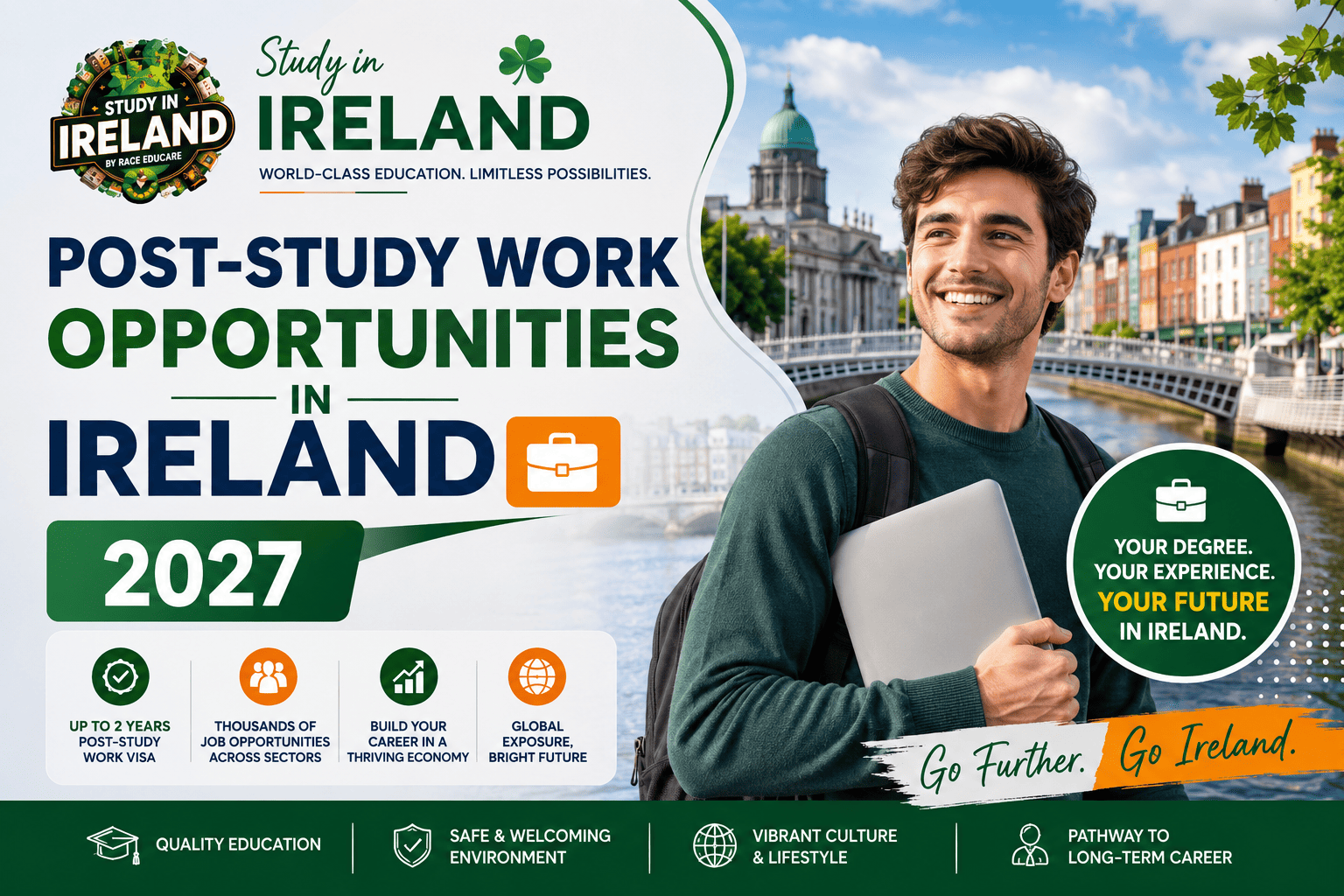
Post-Study Work Opportunities in Ireland 2027
Post-Study Work Opportunities in Ireland 2027 (For MSc & Postgraduate Students)
If you are planning a Master’s or postgraduate diploma in Ireland in 2027, one of the biggest advantages is the chance to stay and work in Ireland after you graduate. For many students from Nepal and South Asia, this is a key reason to choose Ireland over other destinations: you can earn an international degree and then build real work experience in a growing European job market.
Ireland’s post-study work system, especially the Third Level Graduate Programme (Stamp 1G), is designed to help Master’s and postgraduate graduates move smoothly from classroom to career.
1. How Long Can MSc/Postgraduate Students Stay After Graduation?
As an MSc or postgraduate (Level 9) student, you typically have up to 24 months of post‑study work permission after completing your course, if you meet the eligibility conditions.
For Level 9 (Master’s / Postgraduate Diploma) graduates:
- You can usually stay and work for up to 2 years under the Third Level Graduate Programme
- This is often given as 12 months first, and then another 12 months renewal if you show you are actively looking for graduate‑level work
- During this time, you can work full‑time and do not need an employment permit
For many MSc students, these 2 years are enough to get a proper job, build experience, and then transition into longer‑term work visas or permits.
2. What Is Stamp 1G and Why Is It Important for Master’s Students?
The Third Level Graduate Programme (post‑study work scheme) grants you an immigration permission called Stamp 1G.
For MSc/postgraduate students, Stamp 1G allows you to:
- Stay in Ireland after your studies to look for graduate‑level employment
- Work up to 40 hours per week in most roles
- Apply for jobs across IT, data, business, engineering, pharma, finance, and more
- Use this time to move towards a Critical Skills Employment Permit or General Employment Permit, which allow longer stays
This period is essentially your career launch window—it lets you shift from student status to professional status without rushing.
3. Job Opportunities After a Master’s in Ireland
Ireland is particularly strong for MSc graduates in:
- IT, Computer Science, Data Analytics, Cybersecurity, AI
- Engineering and construction
- Pharmaceuticals, biotech, and medical devices
- Finance, accounting, banking, and fintech
- Business, management, marketing, and consulting
Many international MSc graduates find roles such as Data Analyst, Software Engineer, Business Analyst, Product Manager, Financial Analyst, Marketing Specialist, and similar titles in multinational companies and Irish firms.
For students from Nepal and South Asia, this means you can gain international corporate experience and then decide whether to stay longer, move within Europe, or return home with a stronger CV.
4. How MSc Students Can Maximise Their Post-Study Work Chances
If you’re targeting Ireland for a Master’s in 2027, you should plan for post‑study work from day one:
- Choose a Level 9 program at a recognized Irish institution, listed on the Interim List of Eligible Programmes (ILEP)
- Build your CV and LinkedIn profile while you study
- Use your university’s career services, job fairs, and alumni networks
- Try to secure internships, projects, or part‑time roles aligned with your field
- Start applying for jobs before your course ends, not after
The better your profile by the time you graduate, the easier it will be to use your 24‑month Stamp 1G period effectively.
5. Basic Eligibility Conditions for MSc/Postgraduate Post-Study Work
To access Stamp 1G after your Master’s, typical conditions include:
- You must complete a recognized Level 9 qualification (MSc, MA, or Postgraduate Diploma) from an approved Irish institution
- You must hold valid student immigration permission (Stamp 2) when you apply
- You must not have exceeded the allowed total years of stay as a student + graduate
- You need to apply before your student permission expires, with proof of course completion
- You may need to show that you are actively seeking work when renewing the second year
Policy details can change over time, so students should always check the latest official guidance before applying—but the overall structure remains very favourable to Master’s graduates.
6. Why Ireland Is Attractive Specifically for MSc Students from Nepal & South Asia
For MSc and postgraduate students from Nepal and South Asia, Ireland offers:
- A 2‑year post‑study work window to build international work experience
- A strong English‑speaking job market in high‑demand sectors
- Clear pathways from Stamp 1G to longer‑term employment permits
- Globally recognized Master’s degrees that help in both Ireland and other countries later
Have questions about this topic?
Talk to an Expert