 Careers
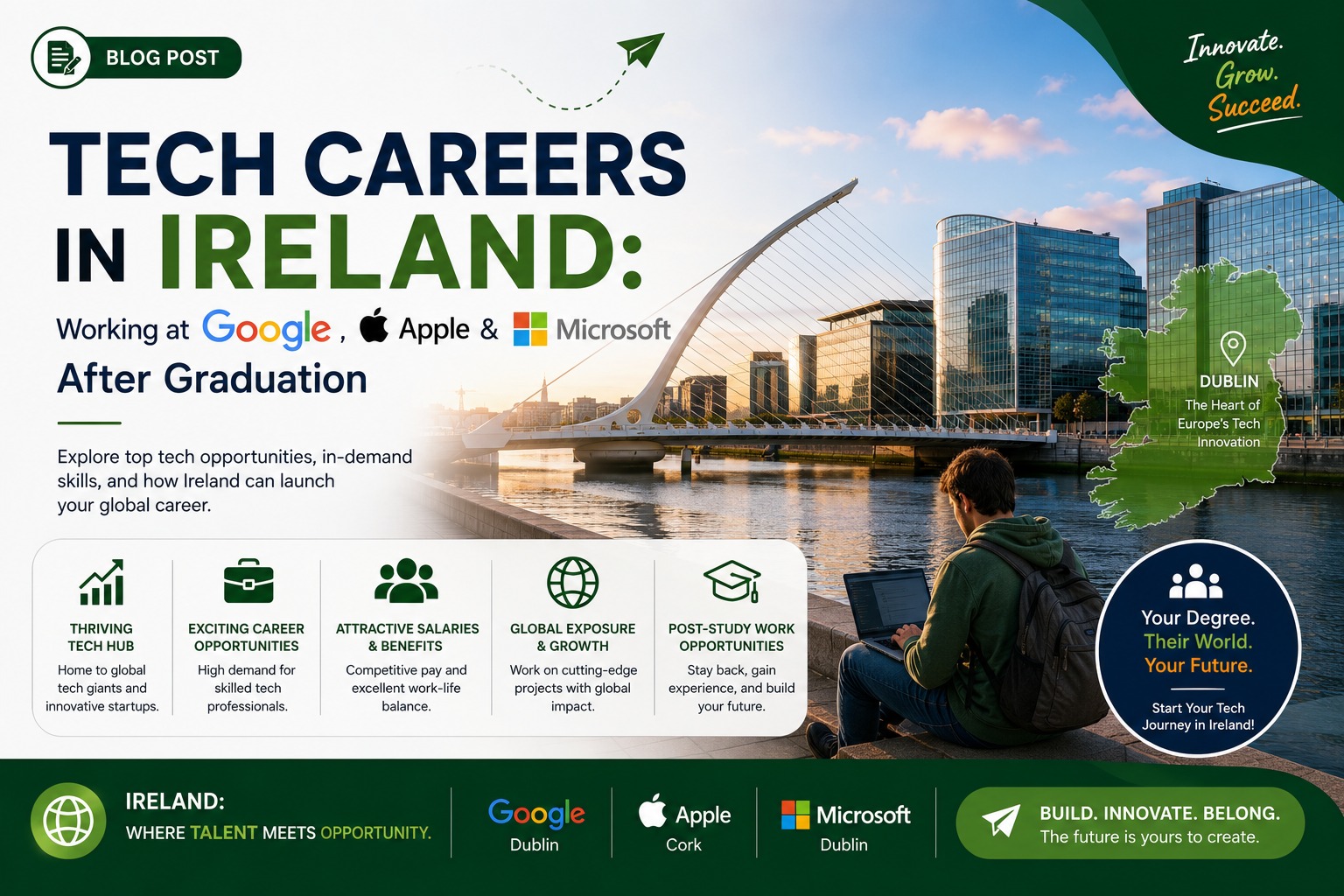
Tech Careers in Ireland 2027 : Working at Google, Apple & Microsoft After Graduation
Ireland’s Stamp 1G post‑study work permission is one of the strongest tools you have for breaking into tech roles after your MSc or postgraduate degree. It gives you up to 2 years of full‑time work rights without needing employer sponsorship, which is perfect for building a profile that big tech companies respect.
Think of these 2 years as your launch pad: you want to move from “fresh graduate” to “hireable tech professional” as fast as possible.
Step 1: Secure Stamp 1G Quickly After Graduation
Before you can use the visa for tech roles, you must get Stamp 1G in place.
- Only graduates from eligible Level 8+ programmes at recognized Irish institutions qualify.
- You need to apply before your Stamp 2 (student) permission expires.
- You must show official proof that you completed your degree and pay the registration fee to get a new Irish Residence Permit (IRP) showing Stamp 1G.
Once approved, you can work full‑time for any employer in any sector, which includes all tech companies.
Step 2: Use the First 6–9 Months to Enter the Tech Job Market
Your first 6–9 months on Stamp 1G are critical. This is when you should aggressively target skilled tech roles rather than casual jobs.
Focus on:
- A CV and LinkedIn profile tailored to software, data, cloud or cybersecurity roles.
- Applying to graduate programmes, entry‑level developer/analyst roles, support engineering roles.
- Attending meetups, tech events, and career fairs where Irish employers and recruiters are present.
Tech employers expect a mix of programming skills, problem‑solving ability and evidence you can work in teams on real projects. The faster you land a skilled role, the easier it is to later move to a work permit.
Step 3: Aim for Roles That Lead to Critical Skills or General Employment Permits
Stamp 1G is temporary—it is designed to help you transition into a proper work permit. For tech graduates, the main targets are:
- Critical Skills Employment Permit (CSEP)
- For software engineers, data scientists, AI engineers, cybersecurity specialists, and other roles on the Critical Skills Occupations List.
- Requires a qualifying salary and degree relevant to the role.
- Often the fastest route to long‑term residency (Stamp 4).
- General Employment Permit
- For tech roles that may not meet Critical Skills salary thresholds but still need skilled workers.
- Can be renewed and used to build several years of Irish work experience.
When you choose jobs during your Stamp 1G period, think beyond the first offer: ask yourself whether this role can lead to CSEP or General Employment Permit later.
Step 4: Build a “Tech Proof” Profile During Stamp 1G
To convince companies to sponsor you for Critical Skills or General permits, you need visible proof that you’re worth hiring. Use your post‑study work time to:
- Work in roles with clear responsibilities (software development, data analysis, cloud/DevOps, security).
- Collect references, performance reviews, and documented achievements.
- Contribute to internal projects, codebases, or client work that show impact.
- Continue building GitHub, portfolios, certifications (e.g., cloud, security).
The stronger your profile by the end of Stamp 1G, the easier it is for an employer to justify sponsorship.
Step 5: Switch from Stamp 1G to a Long-Term Tech Work Permit
Before your Stamp 1G permission ends, you and your employer should prepare an application for a Critical Skills Employment Permit or General Employment Permit.
For example:
- A software engineer with a qualifying salary and relevant degree can often move to CSEP.
- A data analyst or cybersecurity engineer in a shortage area can also fit CSEP criteria.
- Other tech roles may go through the General Employment Permit route, still leading to a longer‑term stay after enough years.
Once the work permit is granted, you move from a graduate stay‑back permission to a proper employment status, which is the next step toward long‑term residency and, eventually, citizenship if you remain in Ireland.
Step 6: Think Strategy, Not Just Survival
Many students waste their post‑study work years in random jobs that do not help them reach tech permits. To use the visa strategically, always ask:
- Does this role match my degree and tech skills?
- Will this experience help an employer see me as permit‑worthy later?
- Am I moving closer to a Critical Skills or General permit, or just surviving?
For MSc tech graduates from Nepal and South Asia, Stamp 1G is more than just “extra time” in Ireland—it is a career window that can convert your degree into a long‑term tech career.
Have questions about this topic?
Talk to an Expert